

Women in STEM: Annie Easley
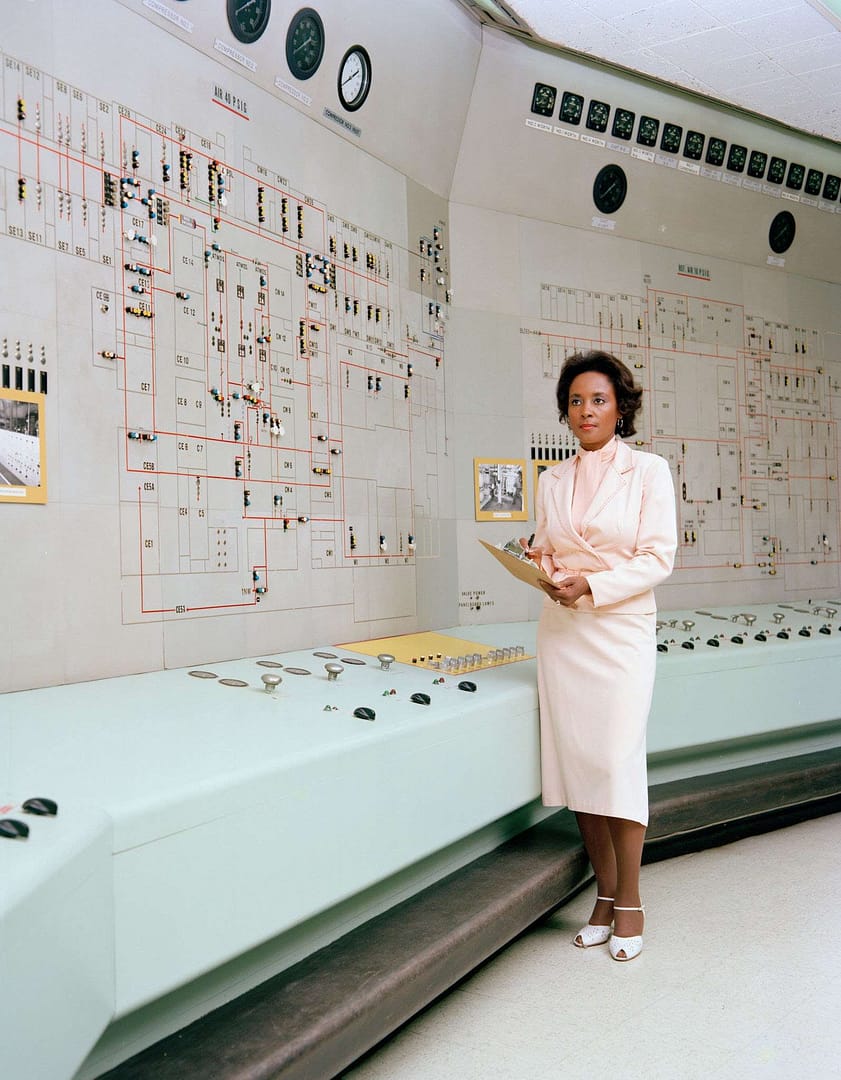
In an era when Black American women faced significant barriers in STEM fields, Annie Easley (1933-2011) carved out an extraordinary legacy at NASA that would help shape modern spaceflight and hybrid vehicle technology. Her remarkable 34-year career offers powerful lessons about perseverance, adaptability, and the importance of representation in technology.
From Human Computer to Computer Scientist
Annie Easley began her NASA career in 1955 as a “human computer” at the Lewis Research Center (now Glenn Research Center) in Cleveland, Ohio. When actual computers began replacing human calculations, Easley didn’t step aside – she evolved. She learned computer programming, becoming one of only four African American employees at the facility.
Revolutionary Contributions
Easley’s most significant work came through her development of software for the Centaur (rocket stage), a high-energy booster rocket that became known as “America’s Workhorse in Space.” Her code helped:
- Launch weather and communication satellites
- Power interplanetary space probes including Cassini
- Enable deep space exploration missions
Perhaps most remarkably, her energy research laid foundational groundwork for modern hybrid vehicles, demonstrating how early space research could have unexpected benefits for everyday technology.
Breaking Down Barriers
Throughout her career, Easley faced both racial and gender discrimination. She often found herself the only African American, or the only woman, in her workplace. Yet she maintained her focus on excellence, saying: “If I can’t work with you, I will work around you.”
She became an equal employment opportunity counselor at NASA, helping address discrimination complaints and working to ensure fair practices in hiring and promotion. Easley also devoted time to tutoring and mentoring students in her community, understanding the importance of creating paths for others to follow.
“My head is not in the sand. But my thing is, if I can’t work with you, I will work around you. I was not about to be [so] discouraged that I’d walk away. That may be a solution for some people, but it’s not mine.”
Legacy for Future Generations
Annie Easley’s contributions extend far beyond her technical achievements, creating a blueprint for success in rapidly evolving technical fields. Through her career, she demonstrated that adaptability isn’t just helpful but crucial for longevity in technology careers. When faced with discrimination, she responded not with resignation but with excellence, proving that talent and determination could overcome prejudice. Perhaps most importantly, she understood that individual success wasn’t enough—she dedicated herself to mentoring others, creating a ripple effect that continues to influence space exploration while inspiring new generations of scientists and engineers from underrepresented backgrounds. Her work on the Centaur project continues to influence space exploration today, while her example inspires new generations of scientists and engineers from underrepresented backgrounds.
Impact on Modern Technology
The technologies Easley helped develop continue to shape our world in profound and unexpected ways. Her pioneering work on energy efficiency studies laid crucial groundwork for modern hybrid car design, while the Centaur rocket technology she developed remains a cornerstone of space missions today. Her innovative programming methodologies, developed during the dawn of computer science, helped establish best practices that influenced the field’s early development. This intersection of space technology and everyday innovation exemplifies how her forward-thinking approach to problem-solving created lasting impacts across multiple industries.
Annie Easley’s journey from “human computer” to NASA pioneer stands as a testament to unleashed human potential. While her code helped launch spacecrafts beyond our atmosphere, her greatest achievement may have been proving that brilliance knows no bounds. Every time we glimpse a satellite photo, drive a hybrid car, or marvel at images from deep space, we experience the ripple effects of her determination to excel—not just for herself but for all those who would follow in her footsteps.
This article is part of Rhian Studio’s Women in STEM series, celebrating the contributions of extraordinary women who have shaped the technology landscape. To read more stories, view the Women in STEM tag.
Comments are closed.