

Venus is Missing
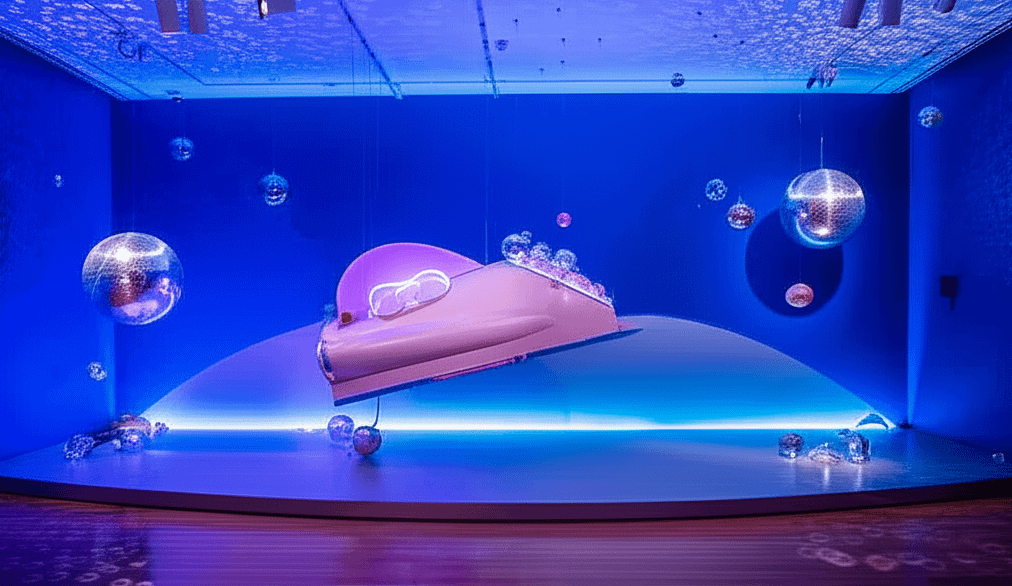
A Radical Reimagining of Beauty, Absence, and Power
In the heart of downtown Seattle, the Seattle Art Museum (SAM) presents Venus is Missing, a dazzling and defiant exhibition by artist, curator, and community organizer Tariqa Waters. Known for her maximalist style and fearless cultural critique, Waters brings together sculpture, immersive installation, and visual storytelling that “interrogates the importance of styling and beauty, especially its significance for Black women“.
Artist and Visionary

Waters is the founder of Martyr Sauce, a Black-owned, woman-led gallery in Pioneer Square that champions community-rooted contemporary art. Her practice is deeply interdisciplinary, blending fine art, satire, fashion, and narrative to challenge racial and aesthetic hierarchies. In 2023, she was awarded the Betty Bowen Award by SAM, recognizing her bold contributions to American contemporary art.
Venus Reimagined
In Venus is Missing, the title doesn’t reference a mythological goddess or classical figure, but rather Venus, the fiercest of three Doberman pinschers from Waters’ childhood. Her father left the dogs in the family’s care before leaving them himself, prompting her to imagine what it would mean if Venus disappeared. The idea becomes a potent metaphor, layered with personal and symbolic weight.
This is the core of Waters’ latest work: nostalgia tinged with complexity, vulnerability layered with power. The exhibition, anchored by a towering pink rocket ship, riffs on sci-fi aesthetics and pop culture from the 1950s through the 1980s. It pulls viewers into a retro-futuristic narrative rooted in Waters’ own upbringing in Richmond, Virginia during a time of economic hardship and vibrant cultural memory.
Through massive glass ball barrettes scaled-up versions of the elastic hair ties her mother used to style her and her sister’s hair, Waters transforms everyday childhood objects into symbols of care, resilience, and the tensions of growing up.


“They’re adorable, but not for me when I was growing up,” Waters said. These barrettes, now suspended like constellations in the gallery, are literal and metaphorical conduits, connecting viewers to the emotional landscapes of girlhood and generational memory.
“Venus is Missing” becomes a portal—not only into the past but into alternate futures. Waters imagines an escape route, inspired partly by the cultural absurdity and imagination of shows like The Jetsons. “No matter what happens in 2025, we might want the possibility to leave, to move to Mars,” she said. “We’ll want options. So, I was like, ‘I need a rocket ship.’”
Here, “Venus” is not just the missing dog, but the absence of safety, protection, and power in a young girl’s world. And the rocket ship is not just a vehicle—it’s an invitation to dream beyond the confines of history, gender, and societal expectation.
Imagination as Resistance, Memory as Blueprint
Tariqa Waters’ Venus is Missing is a time capsule and a launchpad. Rooted in personal history and cultural critique, it transforms objects of childhood and symbols of domestic life into monumental works of speculative imagination. Waters doesn’t just invite viewers to witness her story, she builds a world where the past, present, and future collapse into a single orbit. This work holds particular resonance within broader conversations about who gets to imagine the future and who is expected to remain tethered to the past. In scaling up objects like ball barrettes into luminous constellations, Waters insists on the visibility of Black girlhood, working-class memory, and generational care. Her pink rocket ship isn’t just fantasy, it’s a refusal to be left behind.
At Rhian Studio, we explore how storytelling, design, and technology can make space for underrepresented voices to be seen, heard, and celebrated. Venus is Missing offers a powerful parallel: it’s a reminder that equity isn’t only about access, it’s about authorship. Who gets to build the rocket ship? Who gets to decide where it goes?
Waters’ work doesn’t provide easy answers, but, it does offer a vision where imagination is both protest and possibility.
Visit the Exhibition
📍 Venus is Missing is on view at the Seattle Art Museum through January 2026.
🎟️ Tickets and programs: seattleartmuseum.org
Comments are closed.