

Design in 2025: AR, VR, and the Metaverse Are Changing Everything
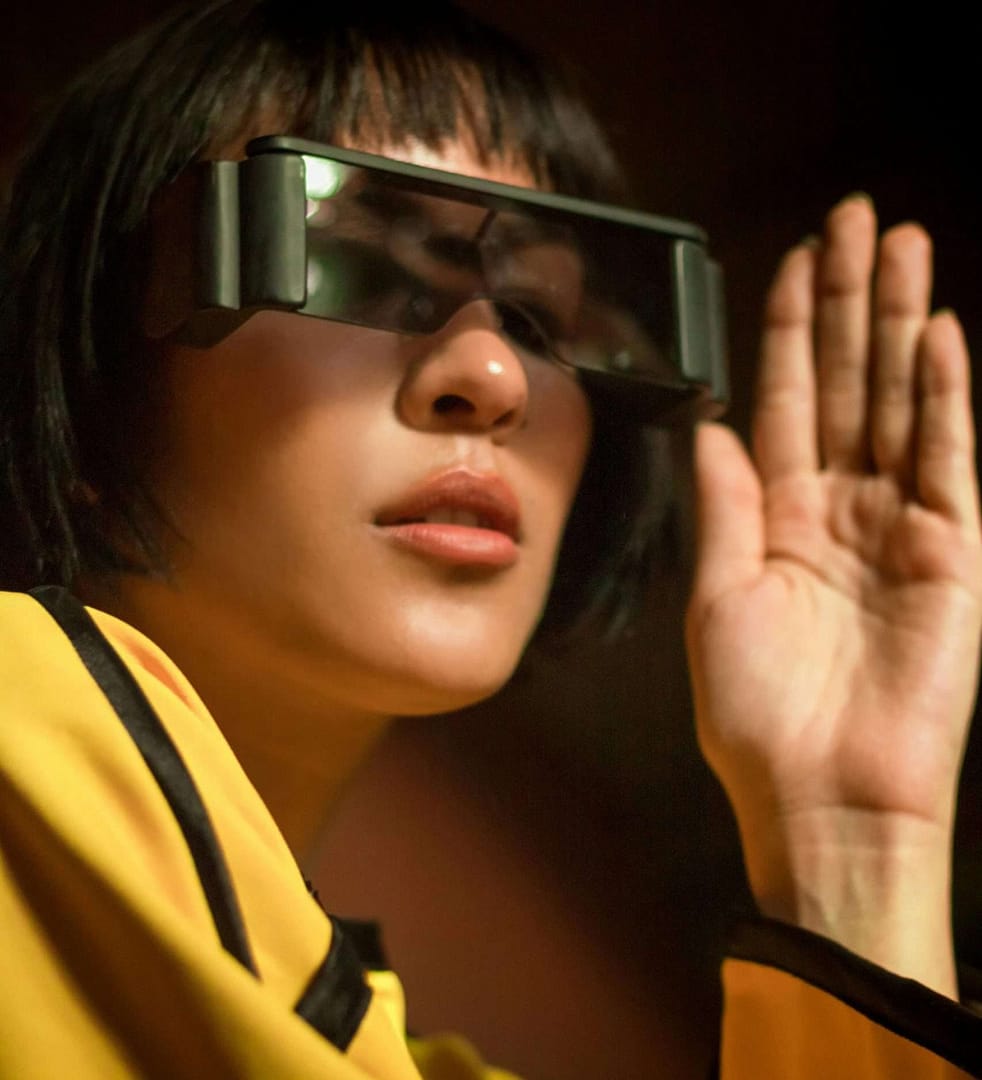
The design world is in the middle of a serious transformation. As we move deeper into 2025, emerging technologies like augmented reality (AR), virtual reality (VR), and the metaverse aren’t just expanding the creative toolkit—they’re challenging us to rethink the very foundations of design.
At Rhian Studio, we’re embracing these evolving mediums to craft more meaningful, human-centered experiences, whether in digital galleries, community spaces, or experimental immersive installations.
The Metaverse: A New Kind of Canvas
The metaverse represents perhaps the most significant paradigm shift in design since the advent of the internet. Unlike traditional 2D interfaces, the metaverse offers designers a 3D playground where space, physics, and user interaction follow entirely new rules. In these environments, digital identity is important. Avatars are a key part of self-expression, and spaces often need to evolve based on user behavior. That means thinking about:
- Spatial storytelling: how experiences unfold across 3D spaces
- Avatar psychology: designing for identity expression and digital embodiment
- Persistent environments: creating spaces that evolve and remember user interactions
- Cross-platform compatibility: ensuring designs work across different metaverse platforms
The Metaverse Standards Forum (established in 2022) continues to work on cross-platform protocols to ensure more cohesive design practices across virtual platforms like Meta Horizon Worlds, Spatial, and Roblox.
VR Is About Immersion and Emotion
VR is where immersion gets turned up to 11. It’s not enough to make something look real, it has to feel good too. That means designing for comfort and accessibility as much as aesthetics. Successful VR design goes beyond visual fidelity. It’s about creating a sense of presence that feels natural and comfortable. This requires a deep understanding of human psychology, ergonomics, and the unique challenges of designing in 3D spaces.
Effective VR design often comes down to:
- Natural navigation and controls
- Reducing motion sickness and visual strain
- Emotional resonance through sound, environment, and interaction
- Haptics and feedback that make virtual experiences feel tangible
The best VR experiences don’t just look good, they leave people feeling something.
AR Is Making the Real World Smarter
Augmented reality takes a different approach. It doesn’t pull you into a new world, it adds to the one you’re already in. Whether it’s a museum guide that comes to life through your phone, or a virtual interior designer that rearranges your living room in real time, AR is all about layering meaningful digital content over physical spaces.
This means designers have to think way beyond the screen. The context where someone experiences your design—their location, their gestures, even the lighting can all change how it works. AR interfaces need to feel intuitive, blend naturally with the real world, and adapt to their surroundings. That’s a new kind of challenge, but it opens the door to some really creative problem-solving.
Launched in 2024, Apple’s Vision Pro, marked a major leap in AR design by introducing spatial computing. It integrates apps directly into the user’s environment using hand tracking, eye tracking, and voice control—offering a glimpse into a future where screens are optional and our surroundings become fully interactive.
Mixed Reality
Metaverse, VR, and AR experiences are starting to merge into mixed reality (MR), creating hybrid experiences that shift between the physical and digital. This convergence is creating new design challenges and opportunities that require interdisciplinary thinking. Future design will likely be characterized by fluidity—the ability to transition seamlessly between physical, augmented, and virtual states. Designing for multi-layered experiences that are context aware and reactive will become the norm. Collaboration will bridge unexpected disciplines, combining spatial computing with choreography, neuroscience with art direction.

What Designers Need Now
Design in 2025 demands an expanded skillset. While typography and layout remain foundational, designers now work in three-dimensional spaces, experiment with real-time rendering, and prototype in engines like Unity. Animation has shifted from enhancement to necessity.
Successful projects increasingly rely on interdisciplinary collaboration. Some of the most compelling experiences emerge when designers work alongside developers, sound artists, 3D specialists, and behavioral researchers. These partnerships push creative boundaries beyond what individual designers can achieve alone.
It also demands we think differently about the people who use our work. Inclusive design is more important than ever. How do you make a VR world accessible for someone with limited mobility? What does privacy look like in a space where body language and facial expressions are tracked? These are the kinds of questions we ask ourselves every day. They don’t always have easy answers, but, they’re part of what makes this moment in design so exciting. You don’t need to be an expert in everything, but expanding your toolkit is key.
Essential Emerging Skills for Designers:
3D Modeling & Animation
- Blender – Free and open-source 3D creation suite
- Cinema 4D – Professional motion graphics and 3D software
- Maya – Industry-standard 3D modeling and animation tool from Autodesk
Real-Time Engines
- Unity – Leading platform for real-time 3D development
- Unreal Engine – Advanced real-time 3D creation tool from Epic Games
Web-Based Immersive Tools
- A-Frame – Web framework for building virtual reality experiences
Motion & Interaction Design
- Principle – UI animation and interaction design tool
- Framer – Interactive design and prototyping platform
- Adobe After Effects – Standard for motion graphics and VFX
- Interaction Design Foundation – UX design courses and community
Sound Design & Spatial Audio
- Dolby.io – APIs for spatial audio and media processing
- Dear Reality – Tools for immersive 3D audio production
- Mozilla MDN – Web Audio API
Accessibility Design for Immersive Media
- XR Access – Community working to make XR accessible
- W3C Accessibility Guidelines – Authoritative web accessibility standards
Our Approach at Rhian Studio
For us, the tech is always exciting, but the goal hasn’t changed. Whether we’re working on a traditional site or an interactive space, we start by asking: who is this for, and how should it feel?
We believe in exploring new tools without losing sight of the fundamentals. Good design is still about empathy, clarity, and purpose, no matter the medium.

Want to Start Exploring?
You don’t need a huge budget or advanced tools to get started. Try out Frame VR or TikTok’s Effect House for AR. Join online communities, learn about spatial UI, play with 3D space, and study the basics of lighting, animation, and movement. Most of all, stay curious and keep experimenting.
The future of design is already here. Now’s the time to start shaping it.
Resources
🎓 IEEE VR Conference & Resources
Hub for the annual IEEE Conference on Virtual Reality and 3D User Interfaces, featuring papers, videos, and academic resources from global XR researchers.
📚 International Journal of Human-Computer Studies
Peer-reviewed research focused on the intersection of human behavior and computer interaction, including AR/VR design.
🧪 MIT Reality Hack
Annual hackathon that explores cutting-edge applications in AR/VR, showcasing experimental tools, frameworks, and collaborations.
📖 W3C Immersive Web Working Group
The standards group developing specifications like WebXR to ensure cross-platform interoperability and accessible immersive experiences.
🌐 WebXR Device API – MDN Web Docs
Technical reference for developers building immersive web-based experiences using the WebXR API.
Looking for more insights? Check out our other posts with tips, tools, and inspiration under the Resources or Design tags.
Comments are closed.